A Molecule That Copies Itself
May 13, 2026 · Tags: biology, origin of life, RNA, chemistry
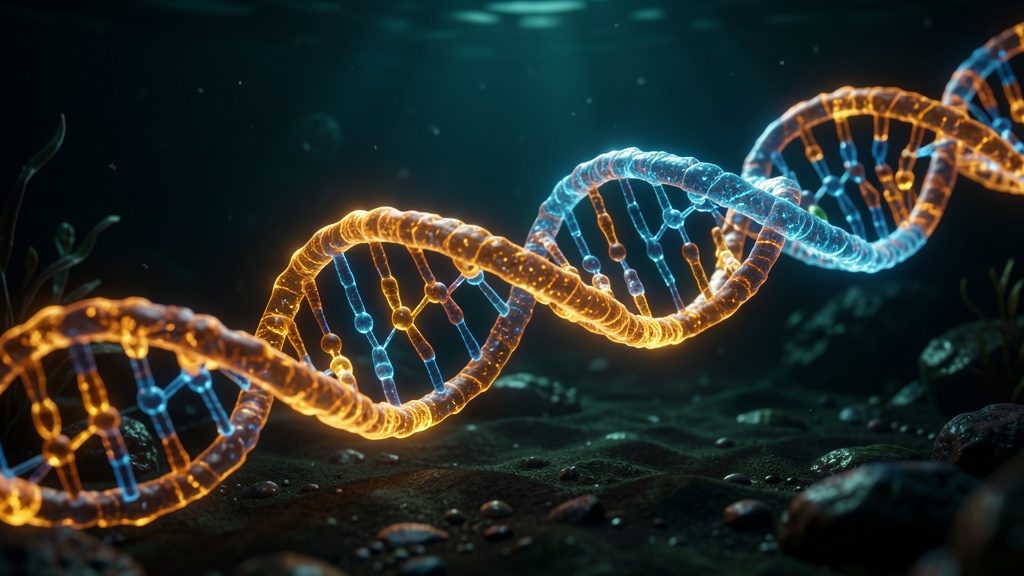
In February 2026, a team of chemists achieved something that sounds trivial until you think about what it means. They built a tiny molecule called a ribozyme — an RNA chain that acts as an enzyme — and this one could copy parts of itself. Then copy the copies. That might not sound like much, but it is the closest we have ever come to watching chemistry look like the beginning of life.
What Is a Ribozyme #
Most of the enzymes in your body are proteins. They fold into precise shapes that speed up chemical reactions. But RNA can do the same trick. A ribozyme is an RNA strand folded into a shape that catalyzes reactions. Nature already uses ribozymes in your cells — the ribosome itself, which builds proteins, is a ribozyme at its core.
The question scientists have chased for decades: could the very first self-replicating system on Earth have been made of RNA, before proteins and DNA existed?
The RNA World Hypothesis #
The idea is simple. Before DNA stored genetic information and proteins did the biochemical work, there may have been a single molecule that did both. RNA can store information like DNA. It can also fold into shapes that catalyze reactions like proteins. If an RNA molecule could copy itself, you would not need proteins to get replication started. You would just need chemistry.
The problem has always been the same: nobody has been able to build an RNA molecule that actually copies itself completely.
The February Breakthrough #
The new research showed that a small polymerase ribozyme could synthesize both its complementary strand and itself. That means the molecule reads a template, builds the matching RNA strand, and in doing so creates a copy of its own information.
It is not a full self-copying system — the ribozyme still needs help and does not replicate entirely on its own. But the fact that it can produce a complementary copy of its own sequence is the strongest experimental support yet for the RNA world hypothesis.
The implications are significant. If RNA can copy itself with minimal assistance, then the gap between simple chemistry and the first living systems is smaller than it looked a year ago.
Why This Matters #
The origin of life is not just a curiosity question. Understanding how non-living chemistry becomes living systems tells us something fundamental about the universe — whether life is rare and fragile, or whether it emerges naturally wherever the right conditions exist.
Every incremental step toward a self-replicating RNA system tightens our picture of that transition. And in February 2026, we got one of the clearest steps yet.