Why Your AI Needs to Think Where It Stands
June 15, 2026 · Tags: edge computing, AI, real-time systems, autonomous vehicles
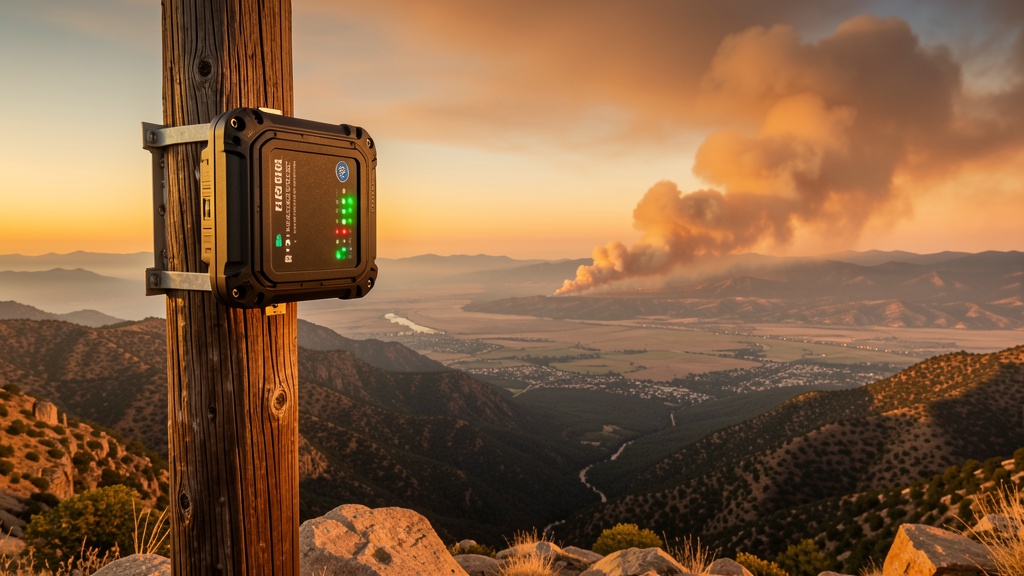
A self-driving car doesn't have time to ask a server what to do. Neither does a factory robot about to collide with a worker, or a wildfire sensor watching wind shift across dry brush. These are the moments where edge AI earns its keep: decisions made in single-digit milliseconds, right where the data is born.
The Latency Problem Cloud Can't Solve #
Cloud AI works beautifully when you can wait. Training a massive language model? Cloud. Running analytics on last quarter's sales data? Cloud. But when a pedestrian steps into the road and a vehicle needs to brake in under 10 milliseconds, a 50-to-200 millisecond round trip to a data center is the difference between a near miss and a collision.
Edge AI runs inference on hardware sitting at the data source — inside the car, bolted to the factory wall, embedded in a camera housing. Response times drop to 1 to 10 milliseconds. The network can go down entirely and the system keeps working. For tunnels, remote oil rigs, and military applications, that offline resilience isn't a nice-to-have. It's the whole point.
Bandwidth is the other constraint nobody talks about enough. A single autonomous vehicle generates terabytes of sensor data per day from cameras, lidar, and radar. Sending all of that to the cloud would cost a fortune in egress fees and choke the network. Edge processing lets you send only the important bits upstream — metadata, alerts, anomalies — while the raw data stays local.
How the Architecture Actually Works #
The 2026 consensus is hybrid, not either-or. Think of it in three tiers:
On-device inference handles safety-critical, deterministic work. Object detection in a car, collision avoidance on a robot arm, wake word detection on a voice assistant. These tasks need sub-10ms response and must work without connectivity. Hardware runs at 50 to 200 watts — NVIDIA Jetson Orin, Google Coral Edge TPU, Qualcomm's Dragonwing IQ9 with its 100-trillion-operations-per-second neural processor.
Regional edge nodes sit 10 to 50 kilometers away, connected by 5G-Advanced or wired backhaul. They handle heavier models, shared fleet state (cooperative perception between vehicles), and aggregation across multiple on-device sensors. Latency here runs 10 to 40 milliseconds. A fleet of autonomous trucks might use regional nodes to coordinate platooning decisions that no single vehicle could make alone.
The cloud does what it's always been good at: training large models, long-term storage, analytics, and the kind of batch processing where latency doesn't matter.
A 2026 architecture called ELARA from Springer researchers demonstrated this tiered approach in large-scale IoT networks. Their system achieved 39 to 52 millisecond end-to-end latency while cutting bandwidth use by 48% and energy consumption by 31%. Task completion rates hit 93 to 98% across heterogeneous edge nodes.
Where This Is Actually Deployed #
This isn't theoretical anymore.
San Diego Gas & Electric announced Edge Alert Sentinel on June 8, a collaboration with Qualcomm and UC San Diego's Scripps Institution. They've deployed ruggedized edge AI gateways on Palomar Mountain to detect wildfire conditions and extreme weather in real time. The devices process environmental data on-site and transmit alerts over a private cellular network directly to SDG&E's control center. A wider rollout across Southern California is planned for 2027.
Intel's Metro Vision AI Suite processes live traffic camera feeds at the edge for urban traffic management. The system does vehicle detection, pedestrian tracking, and behavior analysis locally, then triggers responses through MQTT — adjusting traffic lights, detecting emergency vehicles, monitoring crosswalk safety. All without sending video to a cloud server.
Autonomous vehicle fleets in production as of 2026 use the three-tier hybrid model as standard. On-device perception for safety-critical loops, regional edge for cooperative state, cloud for training and fleet analytics. The cost math works out to roughly $40 to $280 per vehicle per month amortized for on-device hardware, plus $1,000 to $4,000 per month per regional edge site.
The Tradeoff Nobody Wants to Hear #
Edge AI's biggest constraint is model size. You can run a MobileNet-class model on a camera. You can run EfficientDet on an edge server. But you cannot run a 10-billion-parameter language model on a device that draws 50 watts. If your application needs massive model capacity, cloud is still the only option.
There's also the ops burden. Managing model updates across thousands of edge devices — each potentially running different hardware, different firmware, in different environmental conditions — is genuinely hard. Cloud deployments update once. Edge deployments need over-the-air update pipelines, rollback mechanisms, and monitoring for devices you can't easily physically access.
The decision framework is straightforward: if you need sub-50ms latency, data sovereignty, or offline operation, you go edge-first. If you need massive compute, burst scalability, or daily model iteration, you go cloud-first. If you need both, which most production systems do, you go hybrid and accept the complexity.
Why This Matters #
The shift toward edge AI isn't just a technical preference. It reflects a fundamental reality: the most valuable AI decisions are the ones that need to happen right now, in the physical world, without waiting for permission from a server 1,000 miles away. Wildfires don't pause for network latency. Pedestrians don't wait for API responses. The companies building edge infrastructure today are betting that the future of AI is local, fast, and autonomous — and the deployment numbers suggest they're right.