Green Hydrogen's Reality Check: Where It Actually Makes Sense
May 8, 2026 · Tags: energy, hydrogen, climate, industrial
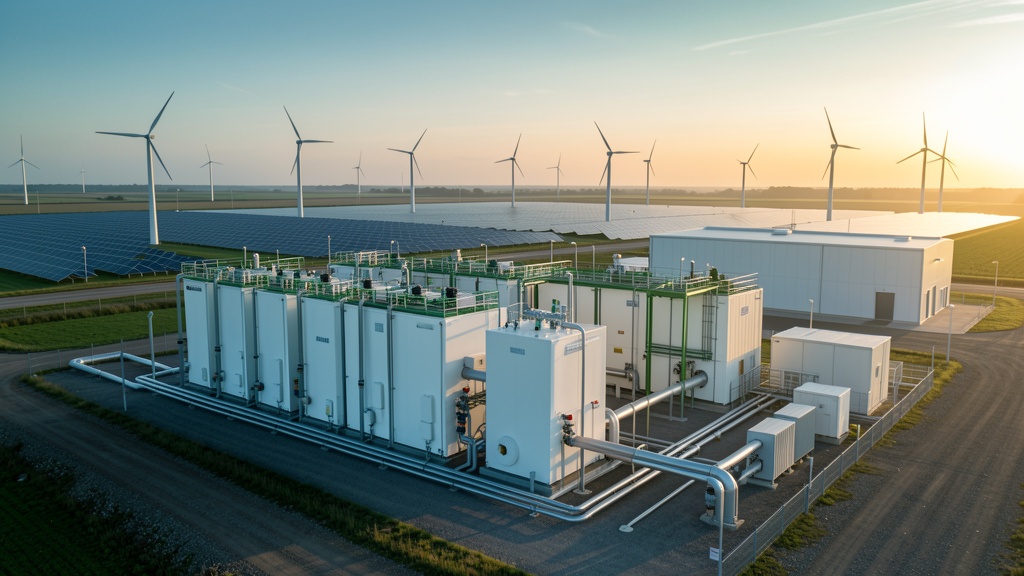
Green hydrogen has been thirty years from commercial viability for about forty years now. The pitch never changes: split water with renewable electricity, get clean fuel, decarbonize everything.
Here's what actually happened in 2025.
The Reality Check #
Global hydrogen demand hit 100 million tonnes in 2024. Ninety-nine percent came from fossil fuels. The one percent that didn't grew ten percent year over year, which sounds impressive until you remember we're starting from almost nothing.
The International Energy Agency dropped a sobering update this year. For the first time, announced green hydrogen production capacity for 2030 went down, from 49 million tonnes to 37 million tonnes. More than eighty percent of those cancellations were electrolysis projects. Natural gas prices fell from their 2022 peaks. Electrolyser costs went up thanks to inflation and slower deployment. The cost gap widened instead of narrowing.
What Green Hydrogen Costs Today #
Green hydrogen runs $4 to $8 per kilogram in most markets. Grey hydrogen from natural gas runs $1 to $2. Blue hydrogen with carbon capture sits in the middle at $2 to $3.50.
The Department of Energy wants to hit $1 per kilogram by 2031. That requires electrolyser costs to plummet and efficiency to jump. It's not impossible. Solar panels and batteries did similar things. But hydrogen isn't following that curve yet.
China Is Winning the Electrolyser Race #
China makes sixty percent of the world's electrolysers. They account for sixty-five percent of global installed and committed capacity. An electrolyser installed in China costs $600 to $1,200 per kilowatt. Outside China, the same installation runs $2,000 to $2,600.
Even shipping Chinese electrolysers abroad with tariffs and engineering costs only brings the price to $1,500 to $2,400. Western electrolyser companies are seeing revenue drops and bankruptcies. Consolidation is coming.
Where Green Hydrogen Actually Works #
The near-term applications don't require new infrastructure. They replace grey hydrogen where it's already used: making ammonia for fertilizer, refining oil, synthesizing methanol. The hydrogen is an intermediate feedstock, so the cost premium gets diluted. Using green hydrogen to make steel for electric vehicles increases the total vehicle price by about one percent.
Medium-term applications include direct reduction of iron ore for green steel, heavy-duty trucking, and long-distance shipping via ammonia or methanol carriers. The HYBRIT project in Sweden is leading on green steel. More than sixty methanol-powered ships are already operating, with three hundred on order.
Longer-term and far less certain: long-duration energy storage, power generation when renewables aren't available, aviation fuel from synthetic kerosene.
Projects That Are Actually Getting Built #
Saudi Arabia's NEOM complex is eighty percent complete. Four gigawatts of solar and wind will produce six hundred tonnes of hydrogen per day as ammonia. First product expected in 2027. Total investment over eight billion dollars.
China's Envision Chifeng project started operations in July 2025. Phase one produces three hundred twenty thousand tonnes per year. The full build targets 1.52 million tonnes annually. The system uses AI to coordinate wind, solar, storage, and hydrogen-ammonia production in real time.
The Infrastructure Problem #
Hydrogen has terrible volumetric energy density as a gas. You can compress it to very high pressures, liquefy it at minus 253 degrees Celsius, or convert it to ammonia or methanol. Each option adds cost and loses energy along the way.
Existing natural gas pipelines could be repurposed, but they need materials assessment for hydrogen embrittlement. Europe is planning a pan-European hydrogen backbone. Ports are preparing import terminals similar to LNG facilities. Singapore already supplies about twenty percent of global methanol bunkering.
Policy Whiplash #
The European Union is leading with sectoral quotas and mandates. The US Inflation Reduction Act offered up to three dollars per kilogram in production tax credits. Then policy uncertainty hit. Analysts estimate more than seventy-five percent of US green hydrogen projects are now at risk of cancellation or indefinite delay.
India is focusing on refining and fertilizers. Japan and Korea are looking at power generation. The International Maritime Organization's net-zero framework could boost hydrogen-based fuels in shipping, though short-term it may favor LNG and biofuels instead.
The 2030 Outlook #
The IEA expects renewable hydrogen to cost $2 to $9 per kilogram by 2030, down from today's $4 to $8. The gap versus fossil hydrogen shrinks from $1.50 to $8 down to $1 to $3.
Regional variation matters. China could hit cost parity by 2030 thanks to low technology costs and cheap capital. Europe's gap shrinks via carbon prices and high renewable potential. The US and Middle East will likely see a wider gap persist, making carbon capture more competitive near-term.
What This All Means #
Green hydrogen is not a silver bullet. It's expensive. Infrastructure barely exists. Policy support is uneven and can vanish with elections.
But it's also the only viable decarbonization path for certain applications. Steel. Ammonia. Shipping. Long-haul transport. These are not small industries. They represent billions of tonnes of carbon emissions per year.
The question isn't whether green hydrogen will replace fossil fuels broadly. It won't. Battery electric vehicles beat hydrogen fuel cell vehicles for passenger cars. Heat pumps beat hydrogen boilers for home heating.
The question is whether green hydrogen can dominate the niches where electrification doesn't work. That's a much narrower claim. It's also a much more achievable one.
Sources #
IEA Global Hydrogen Review 2025. IEA Global Hydrogen Review 2024. Energy Training. MDPI Energies. Nature Reviews Clean Technology.