Rewilding Works: What the Science Actually Says
May 20, 2026 · Tags: ecology, rewilding, biodiversity, conservation
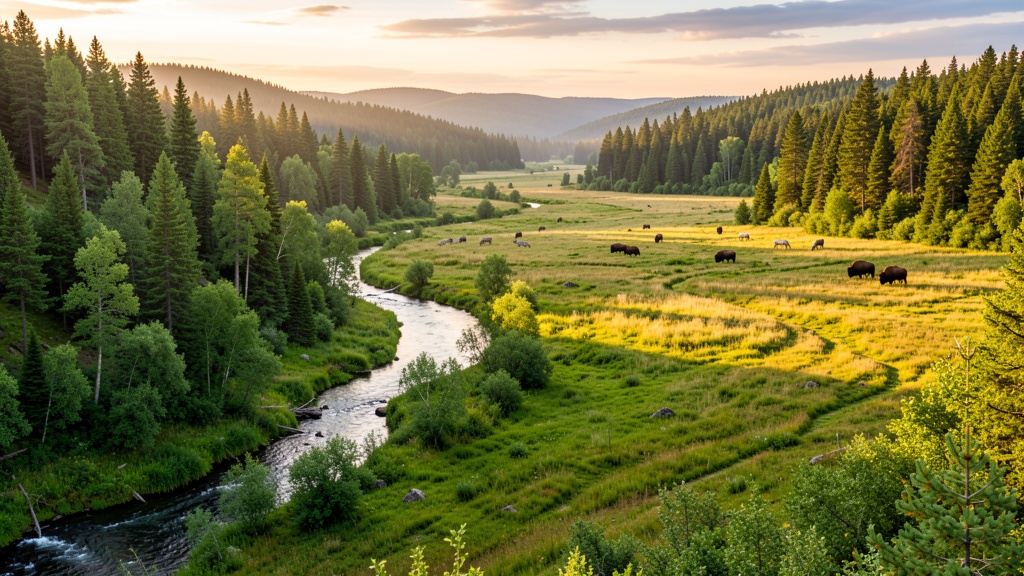
Rewilding has moved from fringe idealism to serious conservation science. After three decades of projects spanning continents, we now have enough data to answer the hard questions: Does it actually work? When does it fail? And what separates a landmark success from an expensive experiment?
A 2025 meta-analysis in the Journal of Environmental Management gives us the clearest picture yet. Selwyn and colleagues synthesized 42 case studies and 305 observations globally. The headline numbers: roughly 70% of rewilding interventions produced positive effects on ecosystem resilience, 10% were neutral, and 20% had negative outcomes.
The real insight is in the breakdown.
What Drives Success #
Herbivore introductions, native plant reintroductions, and invasive species removals consistently delivered. These interventions reliably strengthened ecosystems against biotic disturbances: predation, herbivory, and disease. The mechanism is straightforward: keystone species shape their environments in ways that cascade through the food web.
The Yellowstone wolf reintroduction remains the textbook case. Starting with roughly 70 Canadian wolves in 1995-1996, the effects rippled outward. Deer overgrazing stopped, vegetation reestablished, beavers returned to build dams that created habitats for otters, ducks, and muskrats. Wolf presence depressed coyote populations, which let rabbits and mice rebound, which fed foxes, weasels, and badgers. Wolf carcasses nourished scavengers from bears to ravens. Today, over 500 wolves roam the greater Yellowstone region.
But Yellowstone is the easy case; a protected national park. The harder question is whether rewilding works in human-dominated landscapes.
Rewilding in the Real World #
The answer is yes, with caveats. Three examples show different paths to success.
In London, the Wandle River went from "the hardest worked river for its size in the world" (last trout caught in 1934) to a functioning chalk stream with trout, shrimp, and insects within walking distance of central London. The Wandle Trust removed canalization, cleaned the water, and restocked fish. Urban rewilding is possible, but it requires active stewardship, not just letting nature take its course.
In Romania, European bison extinct for 200 years were reintroduced to the Southern Carpathians starting in 2014. GPS-collared herds increased grazing, which diversified flora and fauna. The vision now spans roughly 3 million hectares. The key insight: the project integrated local communities through nature-based economies (eco-tourism, education, revenue sharing). Rewilding imposed from above fails. Rewilding that pays for itself scales.
In the UK, beavers became the first government-funded flood reduction scheme using a keystone species. Their dams slow water flow, reduce flooding severity, and create wetland habitats. The IUCN cited it in their Global Species Action Plan as a quintessential example.
Where Rewilding Falls Short #
The meta-analysis is direct about limitations. Rewilding was less effective against abiotic disturbances; drought and wildfire showed roughly 20% negative outcomes. Connectivity interventions (enabling species movement across fragmented landscapes) remain severely underrepresented in current projects. Most efforts target trophic complexity or disturbance patterns, leaving post-disturbance recovery underexplored.
The social-ecological results were positive but statistically weak. Human dimensions (ranching, farming, development pressures) must be integrated from the start, not treated as an afterthought.
The Tasmanian devil reintroduction to mainland Australia illustrates the complexity. Devils were released as apex predators to control possums and wallabies, outcompete invasive foxes and cats, and reduce flammable material buildup. But Australia has the world's highest mammal extinction rate. One species won't fix a broken system; it's one tool in a much larger kit.
Why This Matters #
The evidence says rewilding is a real tool, not a fantasy. The 70% success rate is encouraging, but the 20% failure rate and the weak social-ecological results demand humility. The most successful projects share common traits: they start with keystone species, integrate local economies, and accept that some disturbances (drought, wildfire) won't be solved by rewilding alone.
The next frontier is connectivity: enabling species to move across the landscapes we've fragmented. That's harder than reintroducing wolves. But the science is clear that it's where the biggest gains remain.