Six Companies Are Racing to Put Fusion on the Grid. Here's Where They Stand.
June 12, 2026 · Tags: fusion energy, clean energy, nuclear physics, startups
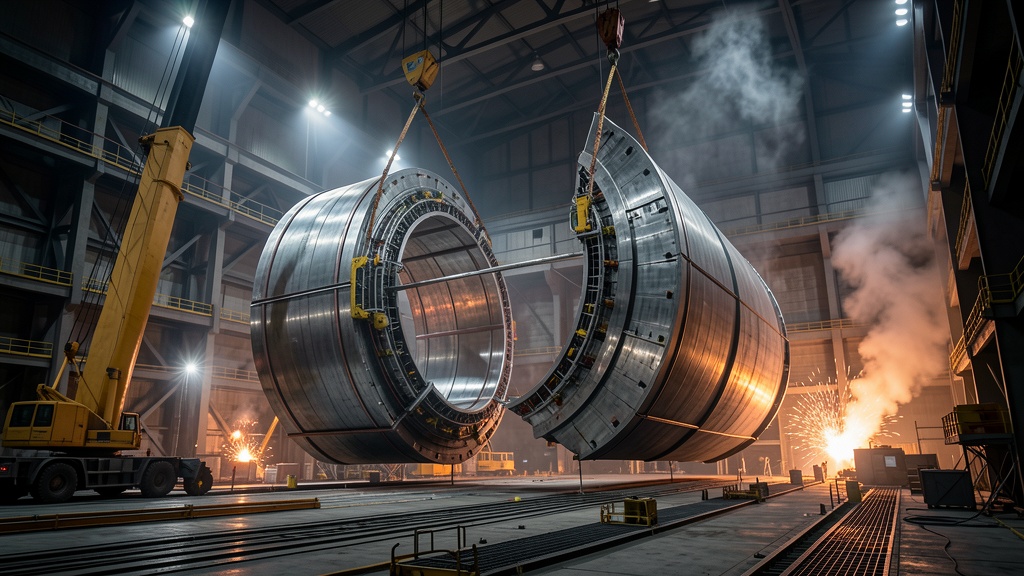
For seventy years, fusion power has been the technology that's always thirty years away. That joke is getting stale. At least six serious companies now have hardware, billions in funding, and customers waiting. The question has shifted from "can fusion work?" to "who gets there first, and will it matter?"
The Big Tokamak Bet #
Commonwealth Fusion Systems, spun out of MIT, is the best-funded private fusion company on Earth. In June 2026, CFS published five peer-reviewed papers detailing the physics of its planned ARC reactor, a compact tokamak that would generate 400 megawatts of electricity using high-temperature superconducting magnets. That's enough to power 280,000 homes, fueled by an amount of deuterium-tritium you could haul in a pickup truck.
The key insight: HTSC magnets let CFS build a reactor a fraction of ITER's size while producing comparable power. Their prototype, SPARC, is 75% assembled and targeting first plasma in 2027. If it works, a commercial plant in Virginia could follow in the early 2030s.
Brandon Sorbom, CFS co-founder, told Ars Technica: "When we build the ARC Fusion Power Plant, it will work." Bold claim. But the peer-reviewed physics behind it is solid.
The Helion Gamble #
Helion Energy went a different direction entirely. Instead of heating plasma and using it to boil water (yes, most fusion designs still rely on steam turbines), Helion's pulsed plasma approach aims to convert fusion energy directly into electricity. The company's Polaris prototype hit 150 million degrees Celsius earlier this year, and it has a power purchase agreement with Microsoft: deliver 50 megawatts by 2029, or pay penalties.
Sam Altman is a backer. So is SoftBank. The funding totals $425 million. But Helion has a track record of slipping timelines, and no published results confirm net power generation from Polaris. The Microsoft deadline is eighteen months away. Physics does not care about contracts.
Stellarators and Pixel Magnets #
Thea Energy, a Princeton spinoff, raised $100 million in May 2026 to pursue a stellarator design with a twist: instead of the massive, precisely shaped magnets that make traditional stellarators nightmarish to build, Thea uses hundreds of small rectangular magnets controlled by software. Think of them as pixels on a screen, each one tunable to shape the magnetic field.
If the approach works, Thea could have a manufacturing edge. Their Eos demonstration reactor starts construction next year, with a commercial plant called Helios targeted for 2034.
Lightning in a Box #
Pacific Fusion raised over a billion dollars for a pulsed-power approach that uses no lasers and no superconducting magnets. Instead, 156 shipping-container-sized modules fire in precise coordination, delivering over a terawatt of peak power in 100-nanosecond bursts to compress fusion fuel. The materials are mundane: steel, aluminum, plastic, oil, water.
The company targets net facility gain by 2030 and commercial plants in the mid-2030s, producing 100 to 300 megawatts each. Its team includes Lawrence Livermore alumni who worked on the 2022 ignition breakthrough, plus engineers from SpaceX and Tesla.
The Clean Fuel Play #
TAE Technologies made a breakthrough in November 2025 that let it skip an entire planned reactor generation. By demonstrating that field-reversed configuration plasmas can form using only neutral beam injection, TAE simplified its path to a power plant called Da Vinci. The company's fuel of choice, hydrogen-boron, produces almost no neutrons, which means far less radioactive damage to reactor walls. The tradeoff: hydrogen-boron requires much higher temperatures than deuterium-tritium.
The Elephant in the Room: ITER #
Meanwhile, the international ITER megaproject in France just passed a milestone in May 2026: five of nine vacuum vessel sectors are now installed, with assembly running ahead of schedule. ITER won't produce electricity, and its first plasma is still a decade away. But it remains the only machine that will test fusion physics at full scale, and the data it produces will inform every private company's designs.
The uncomfortable truth for ITER: by the time it operates in the mid-2030s, solar and batteries may be so cheap that fusion's economic case looks very different than it does today.
Why This Matters #
There are over fifty fusion companies in the United States alone. ARPA-E just committed $135 million to fusion commercialization. The total private investment across the industry now exceeds $5 billion. What changed is not just the physics, it's the customer base: AI data centers need massive amounts of reliable, carbon-free power, and tech companies are writing checks that make fusion's economics look plausible for the first time.
But every fusion company has missed deadlines before. The neutron damage problem remains unsolved for most approaches. No country has a complete regulatory framework for fusion plants. And global tritium supplies are limited.
The race is real, and the engineering is better than it has ever been. Whether any of these companies delivers power to the grid on schedule is a separate question, and honesty demands we say: nobody knows yet.