Vertical Farming Raised Billions. Most of It Is Gone.
June 17, 2026 · Tags: vertical farming, food security, agriculture, technology
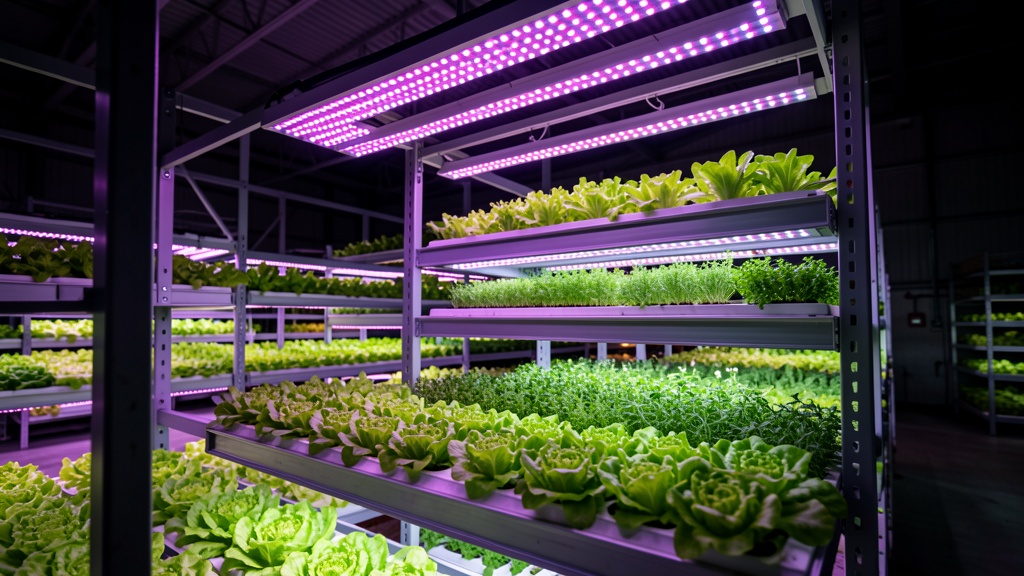
Plenty raised nearly a billion dollars from SoftBank, Walmart, and Jeff Bezos. In 2025, it filed for bankruptcy with over $100 million in liabilities. That is the story of vertical farming in one sentence: massive ambition, brutal economics.
The Money Left #
In 2024, investment in vertical farming dropped 53% from the year before. Not because the idea stopped working in theory. Because the companies kept running out of money in practice.
The pattern is consistent. Bowery Farming, once one of the largest vertical farm operators in the U.S., shut down in late 2024. AeroFarms, which raised over $300 million, lost its largest investor in December 2025 and started looking for a buyer. AppHarvest went bankrupt in 2023. Plenty is pivoting from lettuce to strawberries after its Chapter 11 restructuring.
These were not small experiments. They were heavily funded, well-publicized companies with sophisticated technology. They still could not make the math work.
Why the Math Does Not Work (Yet) #
The core problem is energy. A vertical farm uses four to ten times more electricity than a traditional greenhouse. LEDs, climate control, water pumps, sensors, automation systems, all running around the clock. When electricity prices rose, the already-thin margins evaporated.
The second problem was strategy. Henry Gordon-Smith, whose firm Agritecture has advised on over a billion dollars in controlled environment agriculture investments, describes a consistent pattern: companies treated vertical farming like a software business. Scale fast, capture market, figure out profitability later. But agriculture is not software. You cannot subsidize lettuce production indefinitely with venture capital.
Many farms tried to sell commodity leafy greens into retail at thin margins, competing directly against field-grown produce that costs a fraction as much to grow. The farms that are surviving took the opposite approach: pick high-margin crops, prove the unit economics, then expand slowly.
Who Is Still Standing #
A handful of companies have cracked it, or at least are close. 80 Acres Farms raised $115 million and runs profitable farms in several U.S. states. GoodLeaf Farms in Canada stayed lean and focused on regional expansion rather than national domination. Little Leaf Farms grows pesticide-free lettuce using energy-efficient systems that actually make sense on a spreadsheet.
Empire State Greenhouses is building a 385,000-square-foot facility in New York powered entirely by renewable energy. That last detail matters. The farms that survive are the ones that solved the energy problem, not the ones that ignored it.
The Food Security Case #
Strip away the venture capital hype, and there is a genuine argument for vertical farming. By 2035, more than half the world's population will live in water-stressed regions. Vertical farms use roughly 95% less water than conventional fields. They grow food year-round, regardless of drought or frost. They sit inside cities, cutting transport distances and spoilage.
Right now, vertical farming accounts for less than 1% of global vegetable production. The optimistic projection is 10% by 2035. Realistic projections are more modest, but even a small share matters when climate instability is disrupting traditional agriculture in real time.
Governments are betting on it. Singapore is spending SGD 200 million to produce 30% of its nutrition domestically by 2030. Japan operates over 300 certified plant factories. China folded indoor farming into its national food security plan. The UAE and Saudi Arabia are funding desert farming projects. Combined, government-backed indoor farming programs worldwide total over $2 billion through 2030.
What Comes Next #
The vertical farming industry is not dead. It is being forced to mature. The companies that scaled too fast are gone. The ones left are smaller, more disciplined, and focused on crops where the economics actually work: herbs, microgreens, strawberries, and other produce that is expensive to import, perishable, or high-margin.
The Food Institute's Henry Gordon-Smith puts it bluntly: the hype is fading, and what remains is a real, complex opportunity for people thinking in 10-to-20-year cycles, not two-year venture timelines. For food security, that might be exactly the pace that matters.
Why This Matters #
The vertical farming crash is a case study in what happens when technology investors treat agriculture like software. The farms that failed did not fail because the science was wrong. They failed because they spent hundreds of millions building systems they could not afford to run. The survivors learned that lesson early: prove the economics, control the energy costs, grow what makes money. For a world that needs more resilient food systems, the technology works. The business model is still being built.